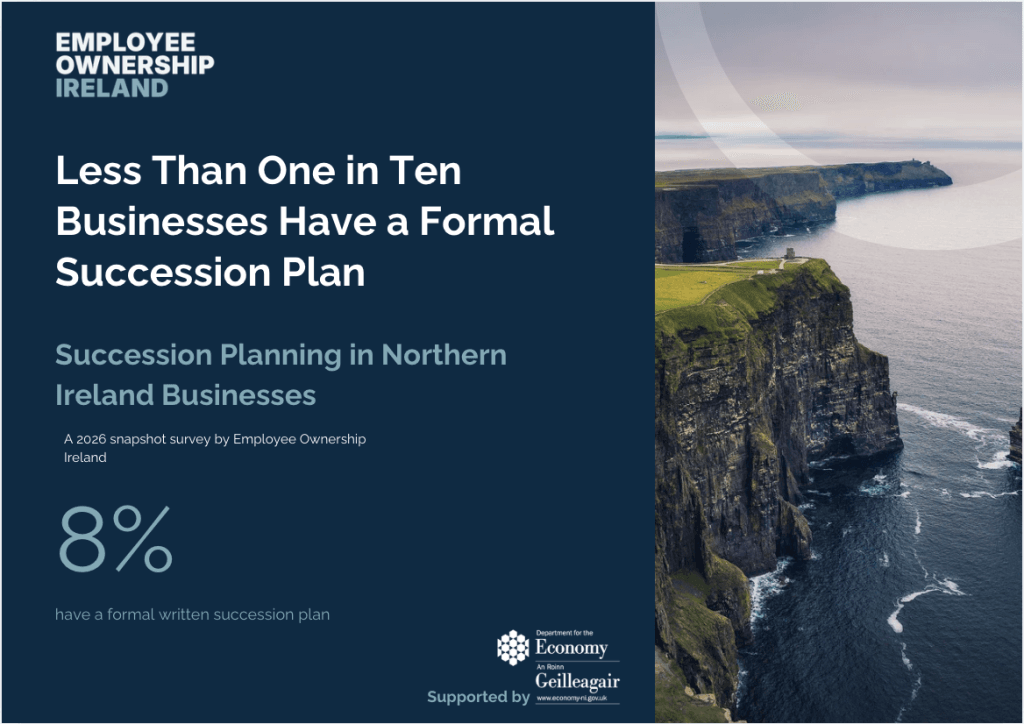
The employee ownership (EO) sector in the UK continues to grow at pace, reshaping business structures and offering real alternatives to traditional succession and ownership models. But what does the data tell us?
Here’s what you need to know.
The Big Picture
As of 2025:
- 2,470 employee-owned businesses (EOBs) are operating in the UK
- They employ over 358,000 employee owners
- 560 transitions were recorded in 2024 alone – and counting
This marks a staggering 1,600% growth in EO business count since 2014.
The data shows clear momentum. This isn’t a trend – it’s a shift.
Source: eoa and WRCEO, UK EO Business Register, May 2025
EO is Dominated by Small Businesses
- 65% of EOBs are small businesses
- 27% are medium-sized
- 8% are large organisations
Employee ownership is clearly being adopted across the spectrum – but small businesses are leading the way.
Where EO is Happening Most
Top sectors include:
- Professional, scientific, and technical activities – 28%
- Manufacturing – 15%
- Construction – 14%
- Administrative and support services – 14%
- Wholesale and retail – 11%
The standout? Construction, which has seen 6000% growth since 2014.
If you’re in this sector, it’s worth asking: why are so many firms switching to EO?
What This Means for You
Whether you’re a business owner, advisor, or policymaker, this growth presents an opportunity:
- For founders: a succession route that protects your legacy
- For employees: a chance to build real ownership and voice
- For the economy: resilience and productivity gains
If the growth of the EO model continues, we need to ensure the infrastructure – advisory services, policy support, and public awareness – keeps up.
Want to Explore the Model?
Employee Ownership Ireland is supporting organisations across Northern Ireland to explore EO. Fully funded feasibility studies are available now, supported by the Department for the Economy.
Want to know more? Join our mailing list here or drop us a line at catherine.muldoon@employeeownershipireland.com